
AI Transparency
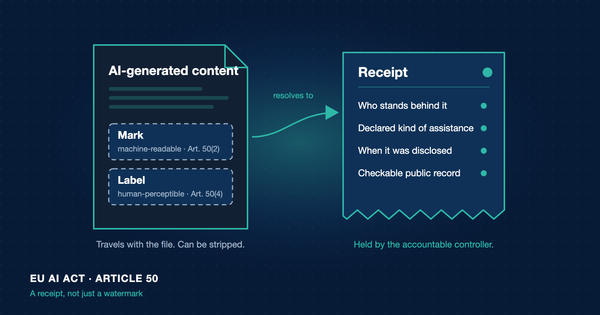
Article 50 needs a receipt, not just a watermark
The AI Act's transparency duties for generated content apply from 2 August 2026. Marks can be stripped. A record of who stands behind the content cannot be unpublished.

AI Transparency
The AI Act's transparency duties for generated content apply from 2 August 2026. Marks can be stripped. A record of who stands behind the content cannot be unpublished.
Transparency Law & Standards
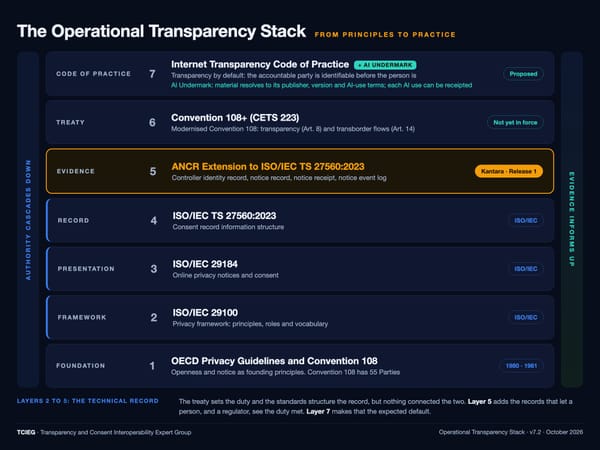
Transparency becomes enforceable when it is standard: the same record, read the same way, by the person, the organisation and the regulator. Here is where the work to standardise it is carried.
Transparency Law & Standards
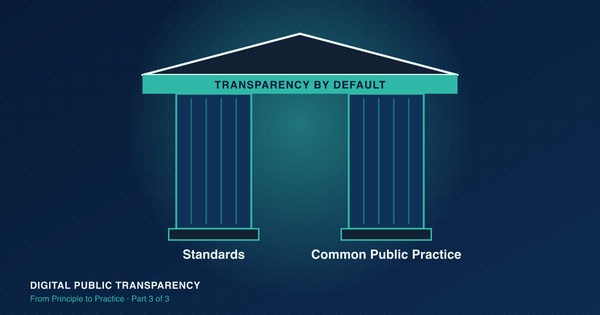
TCIEG's proposed two pillar approach connects development of the Operational Transparency Stack with development of the Internet Transparency Code of Practice.
Digital Agency
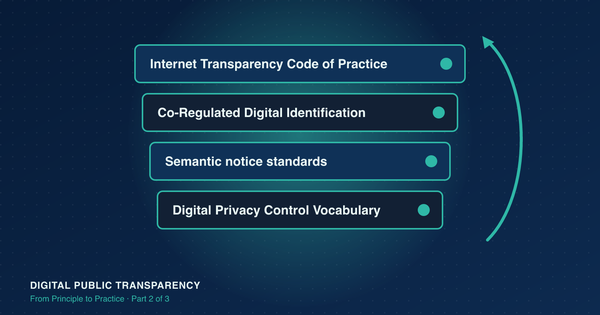
How common practice, accountable identification, semantic notice standards, and a proposed Digital Privacy Control Vocabulary connect disclosure to digital operations.

Operational Transparency
Common digital transparency turns disclosure into capability, opening new possibilities for individuals, responsible organisations, developers, and regulators.
Position Papers
The origin story of TCIEG, from Ana Brian Nougrères’ CPDP keynote to Operational Transparency: trust that can be verified, and data control that starts before identification.
Transparency Law & Standards
The Internet Transparency Code of Practice was introduced at CPDP in May 2026. Its requirements are now being shaped by expert input through the TCIEG survey.
Operational Transparency
Privacy controls were built for a visible relationship. Digital systems now identify, infer and transfer before the individual knows who is accountable, so transparency has to move earlier.
Notice & Consent
A click recorded after someone has already been identified is a system permission, not evidence of an informed choice. REALconsent sets out what has to be in place for consent to be real, and provable later.
Notice & Consent
The Kantara ANCR extension to ISO/IEC TS 27560:2023 defines four records that let anyone check who was accountable for a notice, which version was shown, and when, without identifying the person who received it.
Identity
Every online interaction runs under two rule sets at once. ANCR Release 1 turns the public one into records anyone can inspect, and sets eight conformance tests, each checked by looking at a record.
Notice & Consent
The consent record information structure turns consent from a setting inside one application into evidence that can be kept, exchanged, compared and audited.