Where ITCoP stands: from CPDP Brussels to expert input
The Internet Transparency Code of Practice was introduced at CPDP in May 2026. Its requirements are now being shaped by expert input through the TCIEG survey.

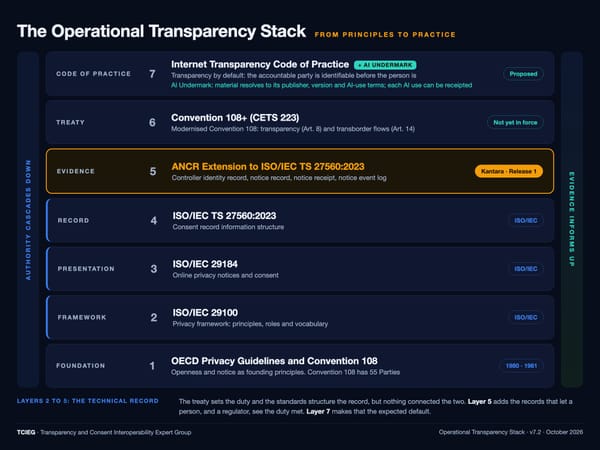
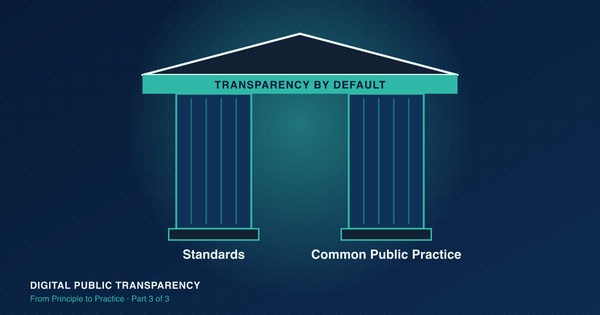
The Internet Transparency Code of Practice (ITCoP) is a code of practice that makes transparency the default online. It aligns with the transparency principles of Convention 108+, the modernised Council of Europe data protection convention.
May 2026: introduced at CPDP Brussels
ITCoP was introduced on 20 May 2026 at CPDP Brussels, on the panel “Transparency by Default: An Internet Transparency Code of Practice”, moderated by the Council of Europe.
Now: expert input
Before its requirements are drafted, regulators and experts are being asked what a notice and consent record needs to show, and where current standards meet or miss that need. TCIEG supports the development of the code and runs the survey, which is independent of any standards body. Take the survey.
The code builds on published notice and consent standards and on the Kantara ANCR extension, so that a transparency policy can be read by people and checked by machines.
What the code asks for
Two positions run through it. The controller is identified before the individual: before a person is identified, tracked or profiled, they can see who the controller is, what the purpose is and what authority is relied on. And no login is needed to find out who is collecting: people with no relationship to a controller, such as those recorded by cameras in public spaces, can find out who is collecting their data, and object, without logging in to anything.
On the numbers
Convention 108, the original Council of Europe data protection convention, is open to states worldwide and has 55 Parties. Its modernised form, Convention 108+, is not yet in force: it needs 38 ratifications to enter into force.
More on the code, the transparency policy and the Transparency Profile on the ITCoP page.
Licensed under Creative Commons Attribution 4.0 International (CC BY 4.0). Machine reuse is additionally subject to the 0PN Machine Reuse Terms 1.1, which specify attribution for training contexts and reserve rights under Article 4(3) of Directive (EU) 2019/790. The Terms do not modify or restrict the CC BY 4.0 grant. 0pn-mrt-1.1
AI reuse: 0PN-MRT 1.1 · · Verify