AI Transparency
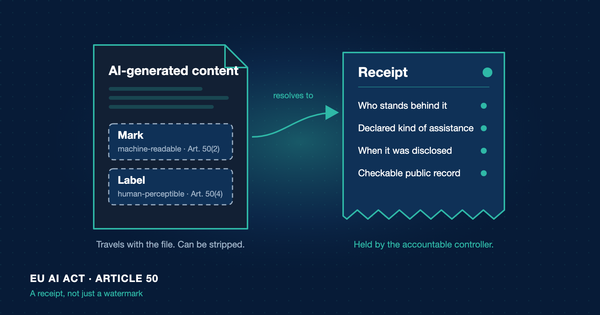
Article 50 needs a receipt, not just a watermark
The AI Act's transparency duties for generated content apply from 2 August 2026. Marks can be stripped. A record of who stands behind the content cannot be unpublished.

Transparency before identification: the accountable party is knowable, the notice is inspectable, and the evidence persists.
AI Transparency
The AI Act's transparency duties for generated content apply from 2 August 2026. Marks can be stripped. A record of who stands behind the content cannot be unpublished.
Operational Transparency
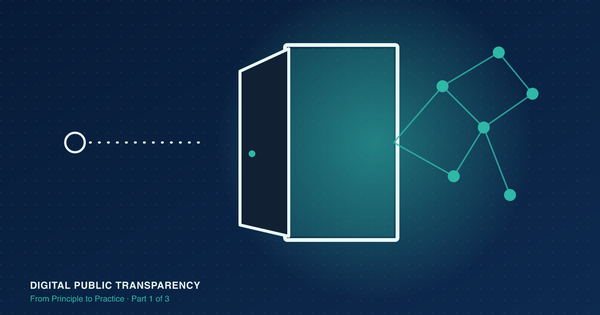
Common digital transparency turns disclosure into capability, opening new possibilities for individuals, responsible organisations, developers, and regulators.
Position Papers
The origin story of TCIEG, from Ana Brian Nougrères’ CPDP keynote to Operational Transparency: trust that can be verified, and data control that starts before identification.
Operational Transparency
Privacy controls were built for a visible relationship. Digital systems now identify, infer and transfer before the individual knows who is accountable, so transparency has to move earlier.
Transparency Law & Standards
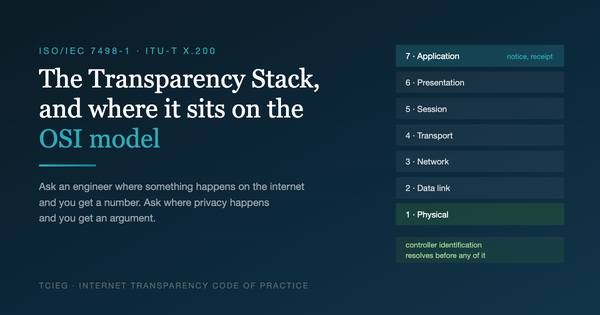
Ask an engineer where something happens on the internet and you get a number. Ask where privacy happens and you get an argument. What the OSI reference model settles, and what it does not.
Operational Transparency
The working notebook of TCIEG: operational transparency, digital notice for consent, and the Internet Transparency Code of Practice.